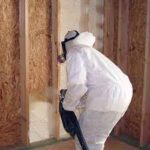

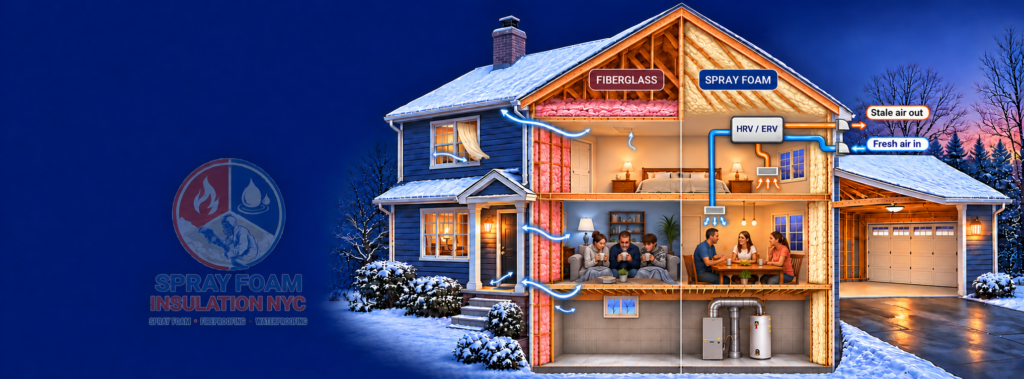
Spray foam can help an older home retain heat when it is installed in the right place and the assembly is designed to manage moisture. Older buildings can contain several wall types, repairs from different decades, and concealed paths for air. Start with the building you have rather than choosing a product for the entire house.
Choose a starting point you can inspect
Attics, rim joists, and open renovation cavities are easier to evaluate than closed walls. Look for missing insulation, draft patterns, or sections that were remodeled separately. If the house has solid masonry walls, tell the contractor early. A masonry wall and a framed wall can have different drying needs.
Keep water out and allow the assembly to dry
Review leaks, damp masonry, and any history of condensation before choosing insulation. Adding foam changes how the materials exchange heat and moisture. Ask how the wall or roof will dry after installation and how the proposed foam works with the other layers. If a surface is wet or damaged, identify the cause before covering it.
Compare targeted retrofit options
One area may need air sealing and an insulation top-up, while another may be a suitable candidate for professionally applied foam. Ask for the proposal to specify each location, the product, the thickness, and how the work deals with ventilation, wiring, and nearby heat sources.
Share what you know about the house
Include its approximate age, wall materials if known, the rooms affected, and any recent renovations. If you are opening walls or ceilings soon, mention the timing so the insulation work can be planned with the other trades.