SPRAY FOAM INSULATION CONTRACTOR
Spray polyurethane foam can be used in exterior wall construction, including walls that are required to have a fire-resistance rating. However, the presence of spray foam introduces additional code considerations because spray foam is classified as foam plastic insulation and is a combustible material.
The key issue is that insulation performance and fire-resistance performance are two separate requirements. A wall may provide excellent thermal performance while still needing specific documentation to demonstrate that it satisfies the required fire-resistance rating.
Understanding this distinction is essential when designing, specifying, reviewing, or installing spray foam in an exterior fire-rated wall.
How Spray Foam Insulation Works?
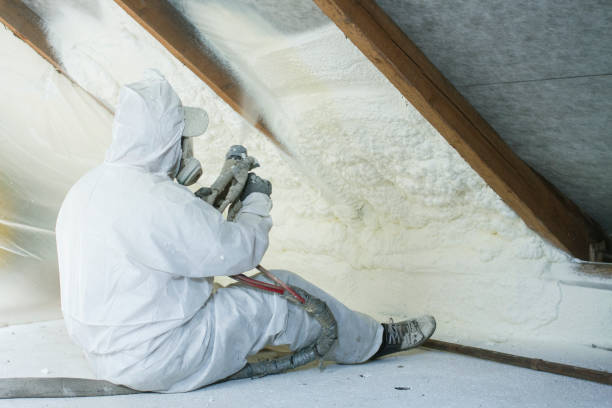
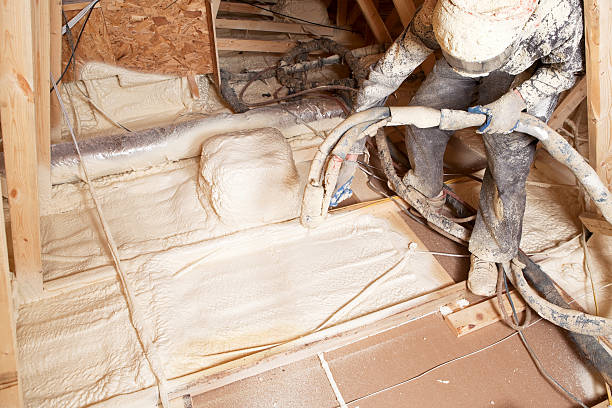
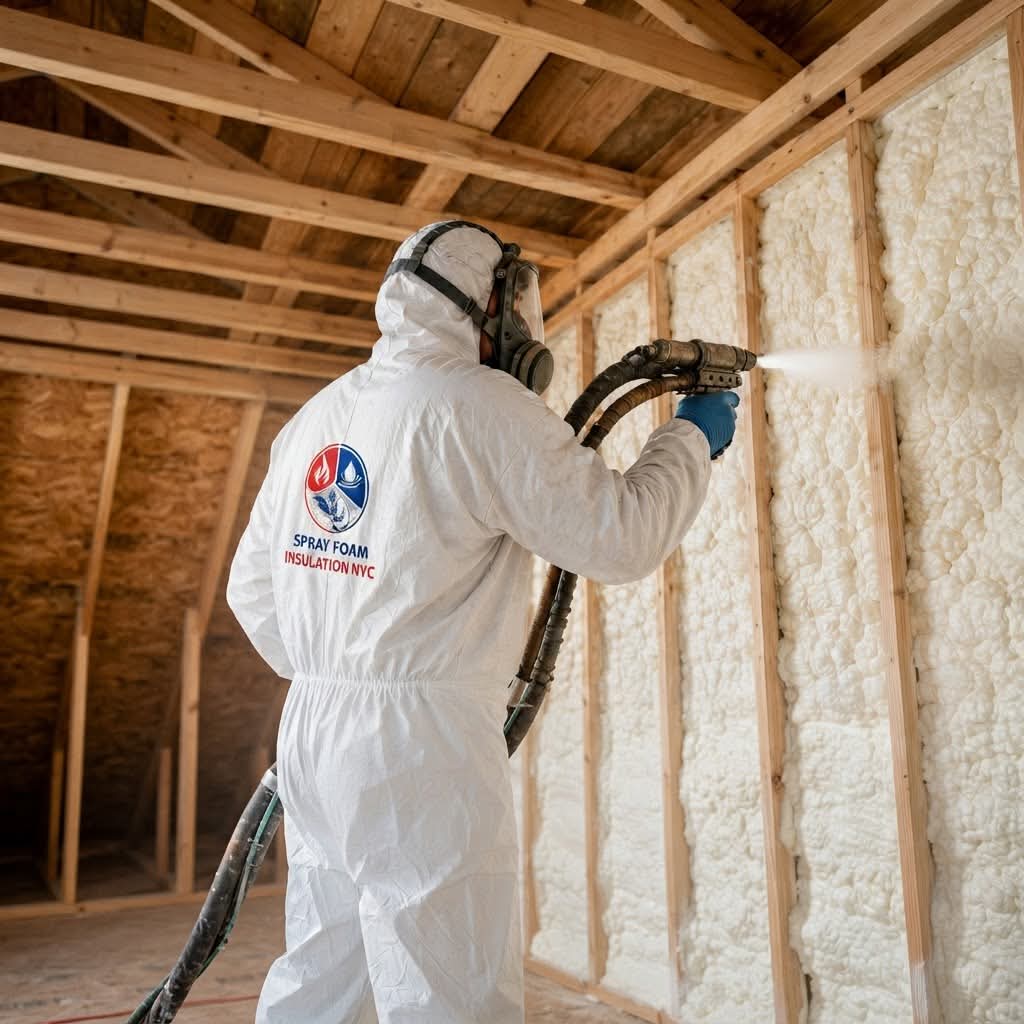
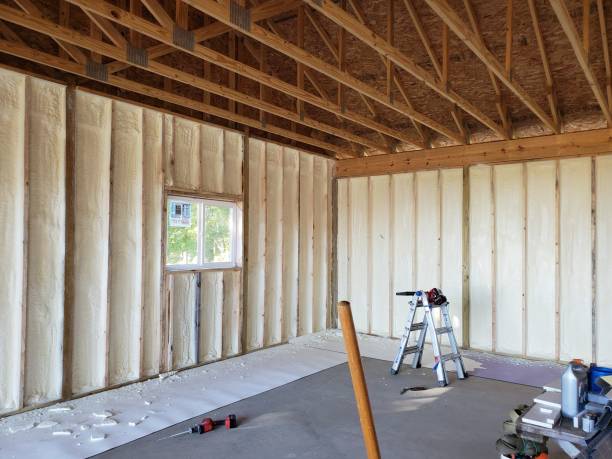
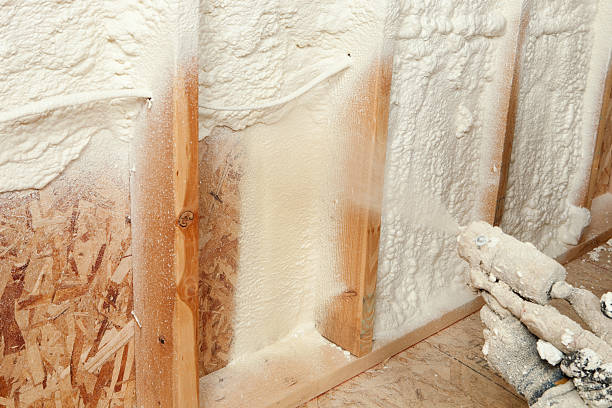
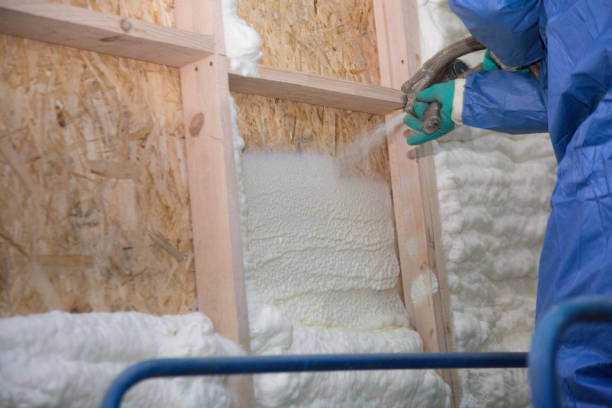
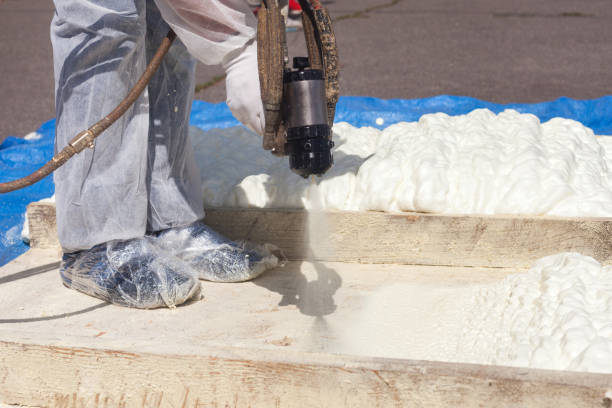
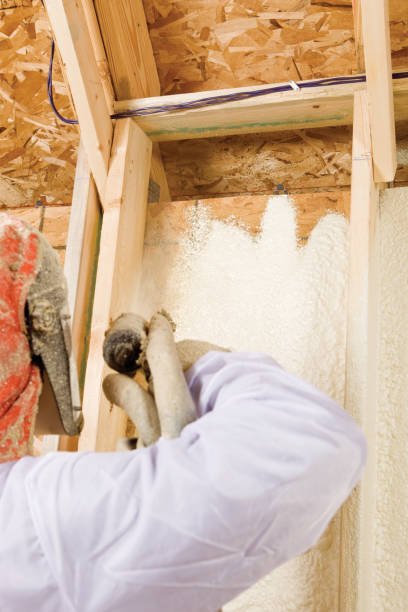
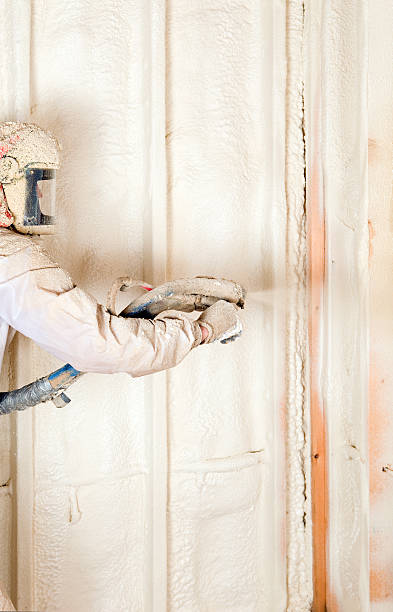
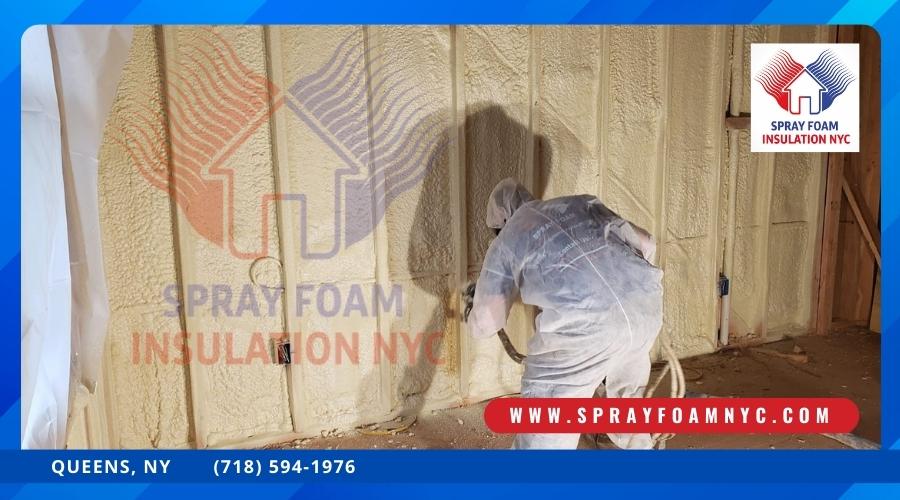
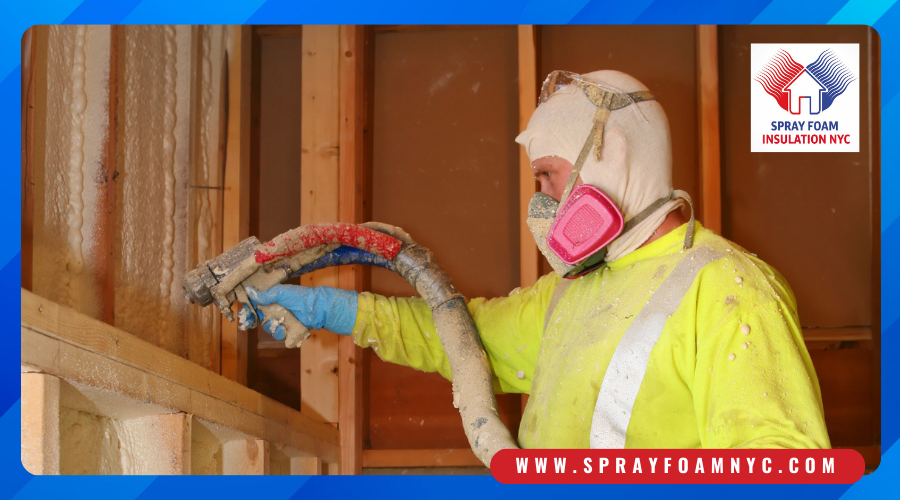
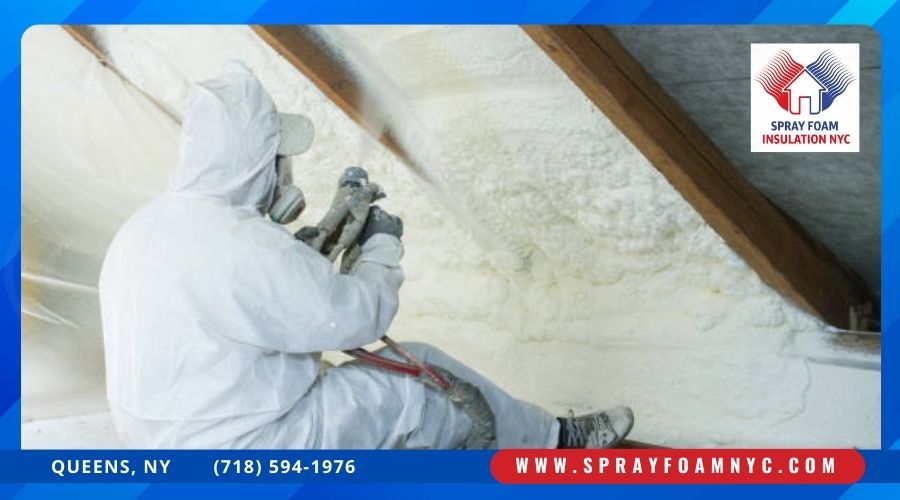
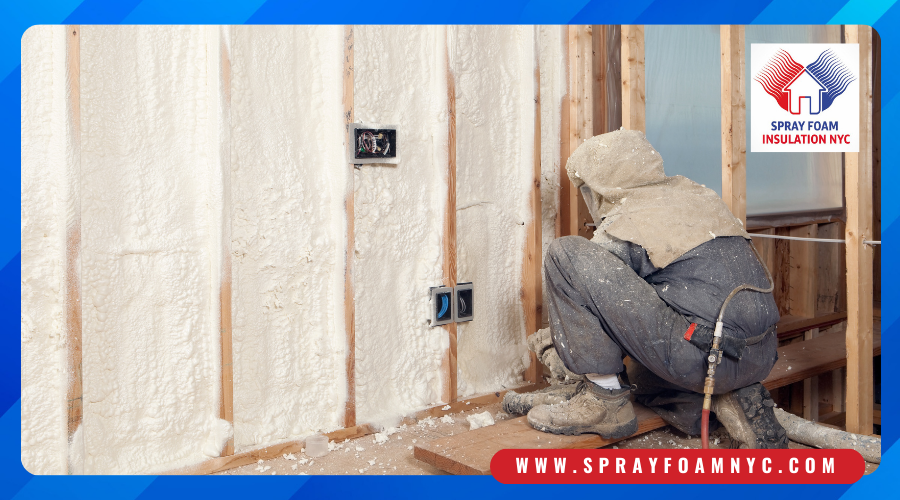
Spray foam is typically applied within the cavities of your home. It forms a continuous barrier on the surface it is applied to. The foam is typically stored as two separate chemicals and is mixed onsite as it’s applied.
Before selecting an insulation system, determine whether the exterior wall is actually required to be fire-resistance rated.
The required rating can depend on several factors, including:
The building code tables governing construction type and exterior-wall fire separation distance must therefore be reviewed before determining the wall assembly.
A wall close to a property line or another building may require a one-hour, two-hour, or greater rating even though an otherwise similar wall farther away may not require a rating.
Fire separation distance is particularly important for exterior walls.
It is generally measured from the exterior wall to a property line, an assumed imaginary line between buildings on the same property, or another location defined by the applicable code.
As the available fire separation distance decreases, exterior-wall requirements generally become more restrictive.
The required fire-resistance rating, allowable openings, opening protection, and exposure direction can all be affected.
Under the model building code, exterior walls with a fire separation distance of 10 feet or less that require a fire-resistance rating generally must be rated for fire exposure from both sides. When the fire separation distance is greater than 10 feet, the required rating is generally based on exposure from the interior side.
This distinction is important when selecting a tested wall assembly.
A wall assembly tested only for fire exposure from one direction cannot automatically be assumed to provide the same rating when exposed from the opposite side.
One common misunderstanding is that certain construction types may be exempt from specific exterior foam-plastic provisions and therefore do not need a tested fire-resistant wall.
That is not correct.
Even where a particular foam-plastic provision does not apply, the exterior wall must still satisfy the fire-resistance requirements established elsewhere in the building code.
For example, Type V construction is treated differently from Types I, II, III, and IV under certain exterior foam-plastic provisions. However, Type V construction must still comply with the applicable exterior-wall fire-resistance requirements.
In other words:
An exemption from an additional foam-plastic exterior-wall test is not an exemption from the required hourly wall rating.
These are separate requirements.
Overall, hiring a professional spray foam insulation service contractor can help ensure that your insulation is installed correctly and efficiently, providing long-lasting benefits such as improved energy efficiency, reduced noise levels, and better moisture control.
We uphold the highest standards in all our projects to ensure our clients are happy with what we deliver.
Both open-cell and closed-cell spray polyurethane foam fall within the building-code provisions governing foam plastic insulation.
These provisions address several fire-safety characteristics, including:
The specific requirements depend on where the foam is installed and how the complete wall is constructed.
One of the most important requirements for spray foam is separation from the building interior.
Foam plastic generally must be separated from the interior of the building by an approved thermal barrier.
A common method is:
Minimum 1/2-inch gypsum wallboard.
Other approved thermal barriers may also be permitted when they have been evaluated in accordance with the applicable fire-test requirements.
There are specific exceptions for certain applications and assemblies, but these exceptions should never be assumed simply because the spray foam itself has favorable flame-spread testing.
A thermal barrier performs a different function.
It delays the temperature rise of the foam during a fire and reduces the likelihood of rapid involvement of the combustible insulation.
Another important distinction is that installing 1/2-inch gypsum over spray foam does not automatically create a one-hour fire-rated wall.
The thermal barrier requirement protects the foam.
The fire-resistance rating evaluates the performance of the complete wall assembly.
A fire-rated wall may include:
Changing any of these components can potentially affect the performance of a tested assembly.
When a wall is required to have a one-hour or two-hour fire-resistance rating, the rating normally must be established through an approved method.
Common methods include:
The most straightforward approach is to use a complete wall assembly that has been tested under an accepted fire-resistance test such as ASTM E119 or UL 263.
These tests evaluate the entire wall assembly under controlled fire exposure.
A tested assembly should be reproduced in the field according to its listing.
That includes details such as:
Testing services for exterior walls recognize hourly fire-resistance testing separately from exterior flame-propagation testing and surface-burning testing.
This is one of the most important practical issues.
Suppose a listed one-hour wall assembly identifies fiberglass or mineral-fiber batt insulation.
That does not automatically mean spray polyurethane foam can replace it.
Spray foam behaves differently during fire exposure.
It has different:
Therefore, insulation substitutions should only be made where the listing, evaluation documentation, approved engineering analysis, or authority having jurisdiction permits the substitution.
The same principle applies to exterior sheathing.
If the tested assembly requires gypsum sheathing, replacing it with wood structural sheathing should not be assumed acceptable unless the assembly documentation specifically allows that configuration.
Small material substitutions can produce major changes in fire performance.
The building code also contains prescriptive fire-resistance methods.
These can be useful where the proposed construction closely matches an assembly specifically described by the code.
When using a prescriptive assembly, every required component must be reviewed carefully.
If the prescriptive assembly identifies a particular type of insulation, sheathing, framing, or protective membrane, a different material should not automatically be substituted.
The code also permits calculated methods for determining the fire resistance of certain assemblies.
This method can sometimes provide a solution when an exact tested assembly containing spray foam cannot be located.
The fire-resistance contribution of recognized components can be calculated according to the applicable code provisions.
However, an important conservative principle should be followed:
Do not assign additional fire-resistance time to spray foam unless the calculation method or approved supporting data specifically allows it.
The wall should achieve the required rating through components whose fire-resistance contribution is recognized.
The spray foam can then provide the required thermal insulation without being relied upon to provide unverified fire-resistance time.
The use of either prescriptive or calculated fire resistance must follow the conditions and limitations of the adopted code.
News & Blog
Some exterior wall systems containing foam plastic must also demonstrate resistance to vertical and lateral fire propagation.
This is commonly evaluated using NFPA 285.
NFPA 285 is a large-scale exterior-wall fire test designed to evaluate how fire propagates through or across an exterior wall assembly containing combustible components.
This test addresses issues such as fire spreading:
This is fundamentally different from an hourly fire-resistance test.
These requirements should not be confused.
Answers:
How long can this wall resist a prescribed fire exposure while maintaining required performance?
Examples include one-hour and two-hour wall ratings.
Answers:
Will fire spread vertically or laterally through the combustible components of this exterior wall system?
A wall may therefore need to satisfy both requirements.
Passing an exterior fire-propagation test does not automatically provide a one-hour fire-resistance rating.
Likewise, having a one-hour fire-resistance rating does not automatically demonstrate acceptable exterior flame-propagation performance.
The additional exterior-wall foam-plastic requirements are particularly important for buildings using Types I, II, III, or IV construction.
Current model-code provisions specifically regulate foam plastic used in exterior walls of these construction types.
Type V construction is treated differently under these particular provisions.
However, this distinction must not be interpreted to mean that spray foam can simply be installed anywhere in a Type V exterior wall.
The wall must still comply with applicable requirements for:
Local jurisdictions may also modify the model-code requirements.
Spray foam products are commonly evaluated for flame-spread and smoke-development characteristics.
This testing is important, but it does not establish a one-hour or two-hour wall assembly.
Surface-burning tests evaluate how a material behaves at its exposed surface under specific laboratory conditions.
They do not evaluate the complete wall’s ability to remain intact during prolonged fire exposure.
A spray foam product can therefore satisfy the required surface-burning limits while still requiring:
These requirements should be evaluated independently.
Fire performance cannot be determined by looking at spray foam alone.
Exterior-wall fire performance depends on the complete system.
For example:
Interior Side
Gypsum board
↓
Wood or metal framing
↓
Spray foam insulation
↓
Exterior sheathing
↓
Water or air barrier
↓
Exterior insulation where applicable
↓
Air cavity or furring where applicable
↓
Exterior cladding
Changing one layer may change how fire moves through the assembly.
This is why tested wall assemblies are very specific about materials and installation methods.
Both open-cell and closed-cell spray polyurethane foam are considered foam plastic insulation, but they have different physical characteristics.
Closed-cell foam generally provides:
Open-cell foam generally provides:
These differences can influence the design of an exterior wall, especially with respect to moisture control, vapor profiles, energy compliance, and cavity thickness.
However, neither type should automatically be considered interchangeable within a fire-rated assembly.
The approved assembly documentation must be checked.
One common design problem occurs when the desired wall uses wood structural sheathing while an available fire-rated assembly requires gypsum sheathing.
The safer approach is not to modify the assembly without documentation.
The design team should instead:
Not every real-world wall configuration has been individually fire tested.
Where a proposed wall differs from a tested exterior-wall assembly, qualified fire-protection or design professionals may sometimes evaluate whether existing test results can reasonably be extended to the modified configuration.
Guidance exists specifically for extending exterior-wall fire-test results to assemblies containing changes in materials or configurations. Such analyses are intended to be performed by professionals who understand the original fire-test data and the behavior of the modified system.
An engineering judgment should therefore be based on actual test evidence rather than assumptions.
A sprinklered building may receive certain code allowances, but the presence of sprinklers should not automatically be interpreted as eliminating exterior-wall fire-resistance or foam-plastic requirements.
Every applicable sprinkler exception must be specifically identified in the adopted code.
If the code does not provide the exception, the underlying wall requirement remains.
When fire-rating requirements involve stairs, the type of stair must be correctly identified.
An exit stair and an exit access stair are not always regulated in the same manner.
A wall may appear to require additional fire protection because it is near a stair, when the actual code classification of that stair changes the requirement.
Before designing a specialized fire-rated exterior wall around a stair enclosure, verify:
Correctly classifying the building element can prevent unnecessary wall construction.
For an exterior wall containing spray foam, the design and construction team should follow a logical sequence:
Step 1 — Determine the adopted code.
Identify the applicable building code edition and local amendments.
Step 2 — Determine the construction type.
Confirm whether the project is Type I, II, III, IV, or V.
Step 3 — Determine the occupancy classification.
Occupancy can affect exterior-wall requirements.
Step 4 — Calculate fire separation distance.
Determine the distance for each exterior wall independently.
Step 5 — Determine whether a fire rating is required.
Review the applicable construction-type and exterior-wall tables.
Step 6 — Determine the direction of required fire exposure.
Verify whether the wall must resist fire from the interior side only or from both sides.
Step 7 — Select the spray foam system.
Determine open-cell or closed-cell foam, thickness, R-value, and required energy-code performance.
Step 8 — Confirm foam-plastic requirements.
Verify surface-burning characteristics and required interior thermal protection.
Step 9 — Determine whether exterior fire-propagation testing applies.
This becomes particularly important in exterior walls containing combustible components.
Step 10 — Select the fire-resistance method.
Use an approved tested assembly, prescriptive assembly, calculated method, or approved engineering analysis.
Step 11 — Compare every wall component.
Confirm framing, gypsum, sheathing, insulation, membranes, air spaces, cladding, fasteners, and installation details.
Step 12 — Submit the complete assembly for approval.
Do this before installation when approval from the authority having jurisdiction is required.
Spray foam can be an effective component of an exterior fire-rated wall, but it cannot be evaluated independently from the rest of the assembly.
The correct approach is to treat the project as several overlapping compliance questions:
Does the exterior wall require an hourly rating?
From which side or sides must that rating apply?
Does the selected wall construction demonstrate the required rating?
Is the spray foam protected by the required thermal barrier?
Do the foam-plastic surface-burning requirements apply?
Does the exterior wall require large-scale fire-propagation compliance?
Does the proposed field installation match the tested or approved assembly?
When those questions are answered individually and then coordinated as a complete wall system, spray foam can be incorporated into exterior fire-rated construction without relying on unsupported assumptions.
The most important rule is simple:
Never assume that adding spray foam to an existing fire-rated wall assembly preserves the rating. Verify the complete assembly, every material substitution, the required fire-exposure direction, and all applicable foam-plastic provisions before construction begins.
Exact requirements should always be confirmed against the building code edition adopted by the local jurisdiction and any applicable amendments.
Trusted Professionals in New York City
Spray foam Insulation, Fireproofing & Drywall Contractors Serving, New York City, Queens, Brooklyn, Staten Island, Manhattan, NJ.
Frequently Asked Questions
Spray foam insulation is a type of insulation that is made by mixing two chemicals that react to form a foam. The foam is then sprayed onto surfaces, where it expands and hardens into a solid material that provides excellent insulation.
Spray foam insulation is environmentally friendly because it can help reduce energy consumption, which in turn reduces greenhouse gas emissions. Additionally, spray foam insulation can be made from recycled materials.
Spray foam insulation can help improve indoor air quality by reducing air infiltration and preventing moisture buildup, which can lead to the growth of mold and mildew.
Spray foam insulation has several benefits over other types of insulation, including improved energy efficiency, better noise reduction, and increased moisture control.
Spray foam insulation is typically fire-resistant, but it is important to check the specific type of insulation being used and ensure that it meets all necessary fire safety standards.
Spray foam insulation is a type of insulation that is made by mixing two chemicals that react to form a foam. The foam is then sprayed onto surfaces, where it expands and hardens into a solid material that provides excellent insulation.
Spray foam insulation can last for many years if properly installed and maintained. It can last up to 80 years, which is much longer than other types of insulation.
Spray foam insulation is environmentally friendly because it can help reduce energy consumption, which in turn reduces greenhouse gas emissions. Additionally, spray foam insulation can be made from recycled materials.
Spray foam insulation can help improve indoor air quality by reducing air infiltration and preventing moisture buildup, which can lead to the growth of mold and mildew.
Spray foam insulation has several benefits over other types of insulation, including improved energy efficiency, better noise reduction, and increased moisture control.
Spray foam insulation is generally more expensive than other types of insulation, but it can provide long-term savings on energy bills and can last for decades.
Yes, spray foam insulation can help reduce noise levels by blocking sound from entering or leaving a space.
The time it takes to install spray foam insulation depends on the size of the area being insulated, but most installations can be completed in one day.
Spray foam insulation can be used in any area of a home or building, including walls, ceilings, attics, and crawl spaces.
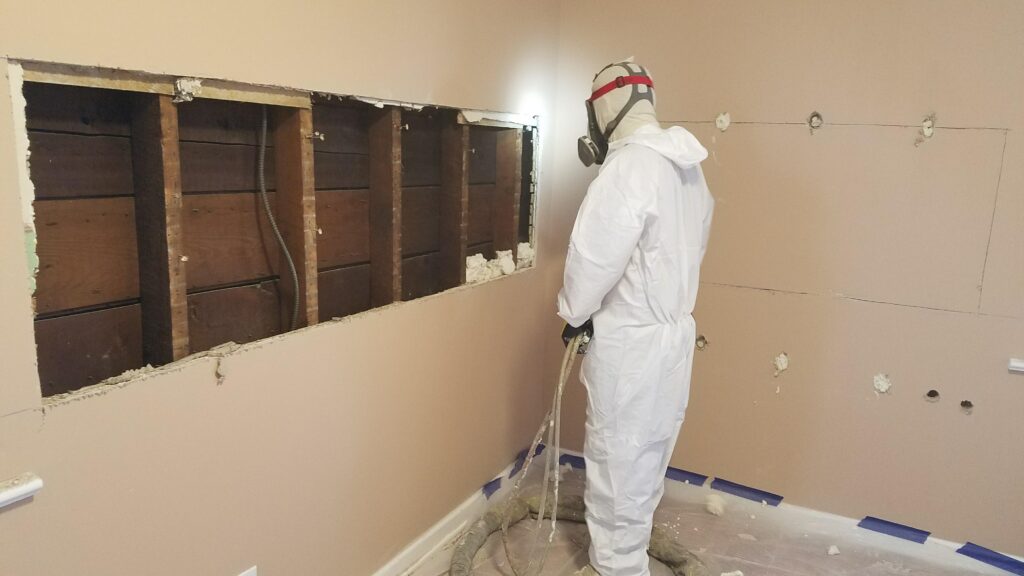
Yes, spray foam insulation can be installed in existing homes or buildings by either spraying it directly onto surfaces or injecting it into existing wall cavities.
Spray foam insulation is typically fire-resistant, but it is important to check the specific type of insulation being used and ensure that it meets all necessary fire safety standards.
During installation, it is important to wear protective clothing, eye protection, and respiratory masks. The installation area should also be well-ventilated to prevent the buildup of fumes.
Spray foam insulation can be removed, but the process can be difficult and expensive. It is usually best to avoid removing it unless absolutely necessary.
Spray foam insulation is typically more energy-efficient than fiberglass insulation because it provides a better seal and prevents air leakage.
No, spray foam insulation does not require any maintenance. It is a long-lasting, low-maintenance insulation option.