R-13 fiberglass may not provide enough protection for a top-floor ceiling. Learn how R-value, air sealing, ventilation, moisture, and closed-cell spray foam affect comfort and energy costs.
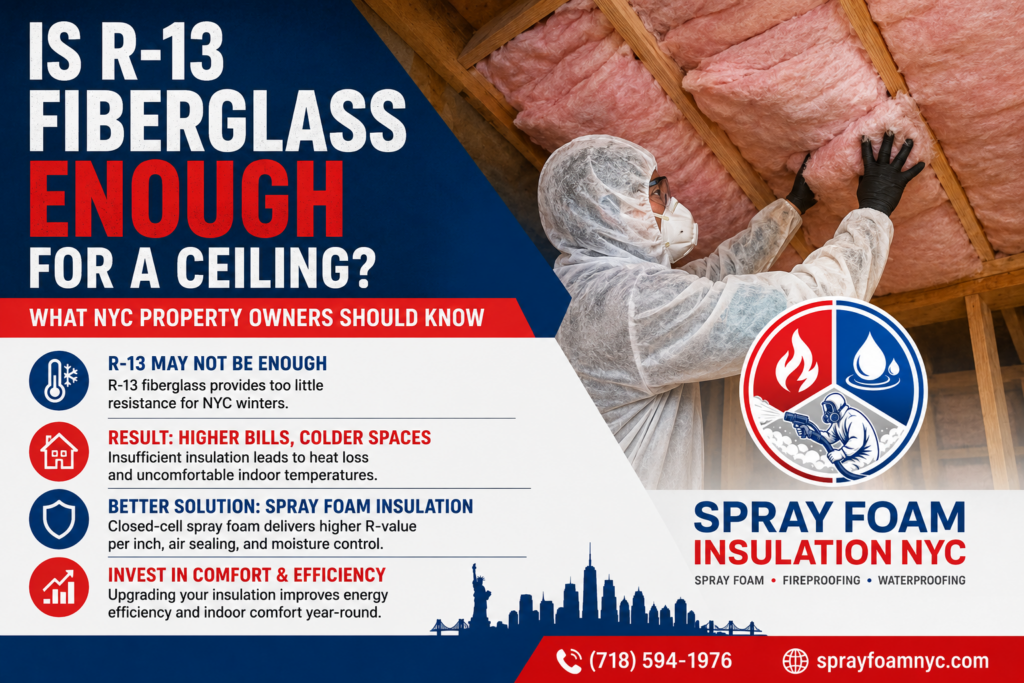
Is R-13 Fiberglass Enough for a Ceiling?
Imagine a small second-floor apartment located directly beneath the roof of an older New York City building. The apartment becomes extremely cold in winter, overheats during summer, and produces unusually high heating and air-conditioning bills.
A contractor offers to install R-13 fiberglass between the ceiling joists because it is inexpensive and fits inside a shallow cavity.
Will that solve the problem?
In most top-floor roof assemblies, R-13 fiberglass alone is not an adequate solution. Before installing any insulation, the ceiling cavity, roof construction, skylights, ventilation, moisture conditions, and available framing depth must be inspected.
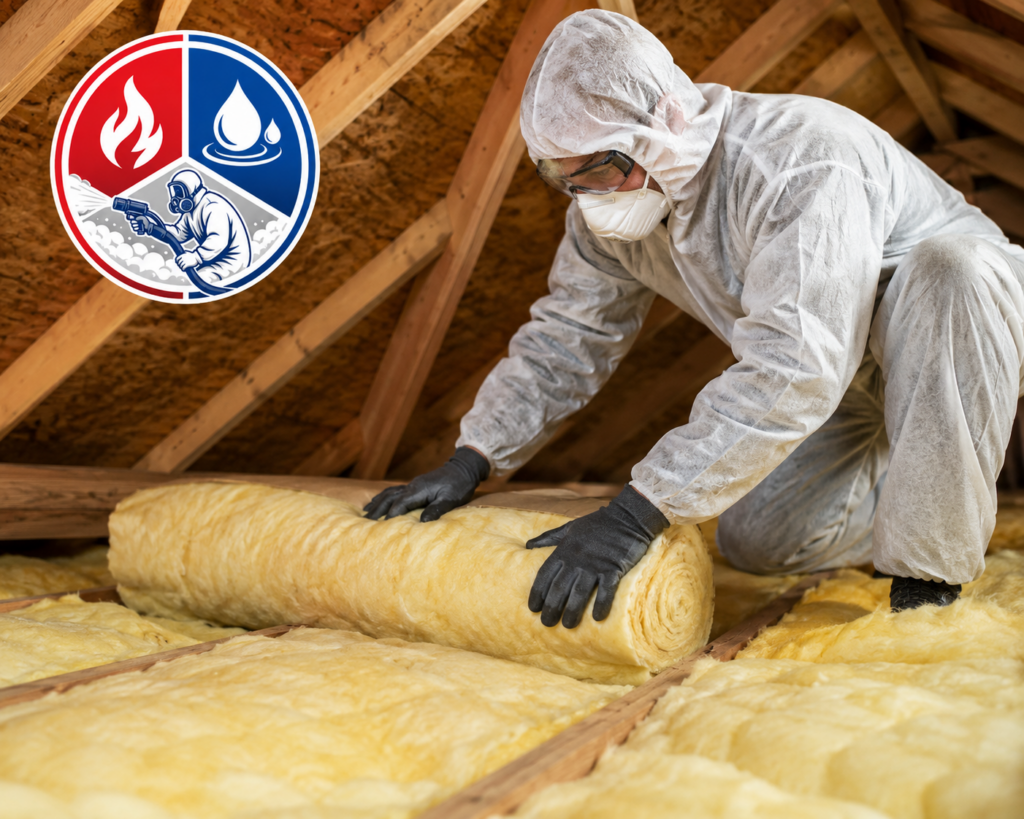
R-value measures a material’s resistance to conductive heat flow. A higher R-value provides greater resistance to heat moving through the building assembly.
R-value does not, however, measure air leakage. An insulation product can have a labeled R-value and still perform poorly when air moves around it through cracks, gaps, penetrations, skylight openings, plumbing lines, electrical boxes, and framing connections.
Insulation and air sealing must work together to reduce heat loss, heat gain, and energy costs.
R-13 is commonly associated with a standard 2×4 wall cavity. That does not mean R-13 is appropriate for a ceiling located directly below a roof.
Under the current New York City Energy Conservation Code’s residential prescriptive requirements, ceiling insulation is generally listed at R-49. Certain ceilings without attics may qualify for a limited R-38 exception when there is insufficient space, but specific conditions and area limitations apply.
Requirements for an existing mixed-use building or alteration may differ depending on the project, occupancy, filing status, and approved compliance method.
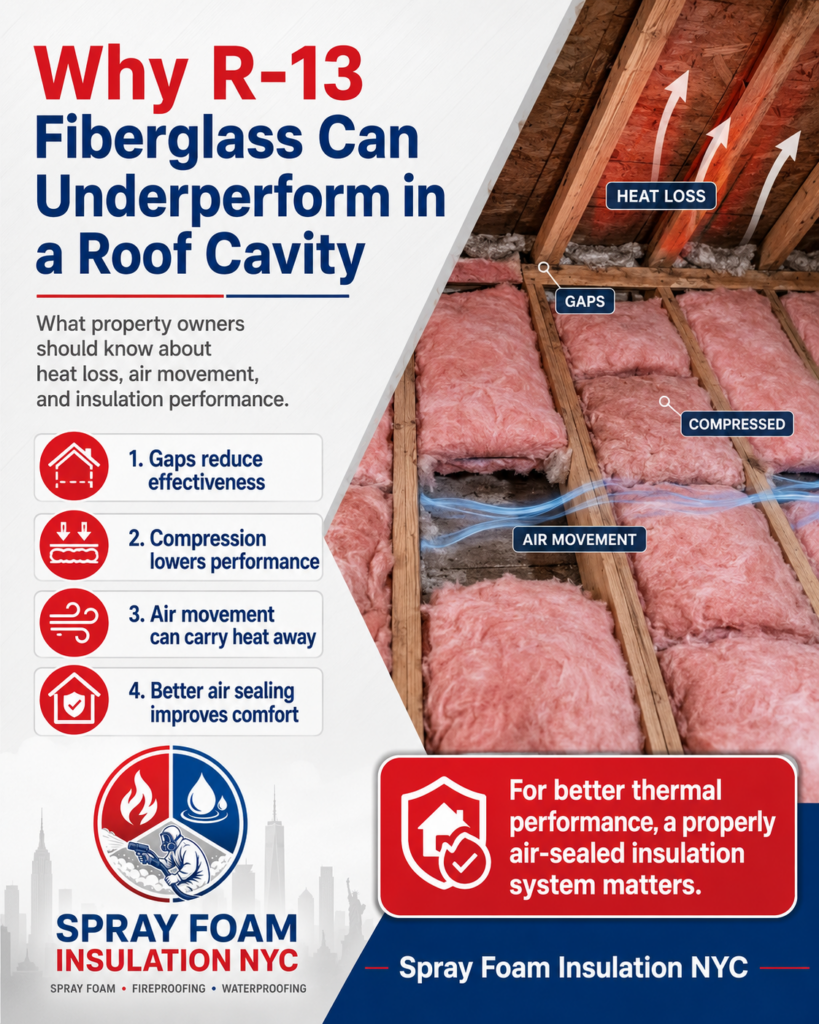
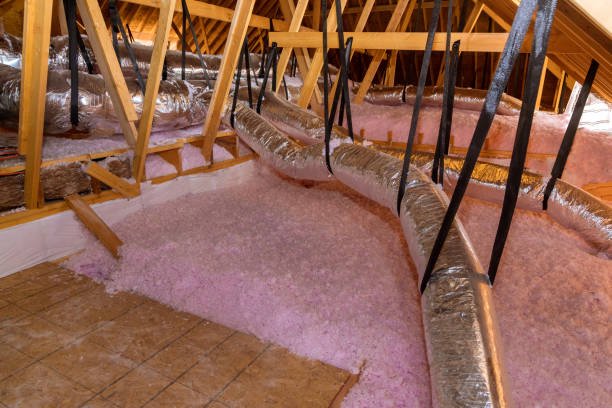
Fiberglass is not inherently a bad insulation product. It can perform well when installed as part of a properly designed assembly.
The problem is that fiberglass is air-permeable. It does not automatically stop air from leaking through the ceiling or roof cavity.
Its performance depends on several installation details:
✔ The insulation must completely fill the intended cavity without gaps.
✔ Fiberglass cannot be compressed into a cavity that is too small.
✔ It must remain in continuous contact with the air-control layer.
✔ Ceiling penetrations must be sealed separately.
✔ A vented roof must maintain a clear ventilation channel.
✔ Baffles must protect soffit and eave ventilation openings.
✔ Bathroom exhaust must discharge outdoors, not into the roof cavity.
When air-permeable insulation is installed in a vented attic or roof assembly, baffles may be required near soffit and eave vents. These baffles preserve the ventilation opening and prevent insulation from blocking airflow.
Installing R-13 fiberglass through a skylight opening without confirming the roof design can leave gaps, compressed sections, inaccessible framing bays, and uncontrolled air movement.
The property owner may pay for insulation and still experience cold ceilings, uncomfortable rooms, and high utility bills.
Overall, hiring a professional spray foam insulation service contractor can help ensure that your insulation is installed correctly and efficiently, providing long-lasting benefits such as improved energy efficiency, reduced noise levels, and better moisture control.
We uphold the highest standards in all our projects to ensure our clients are happy with what we deliver.
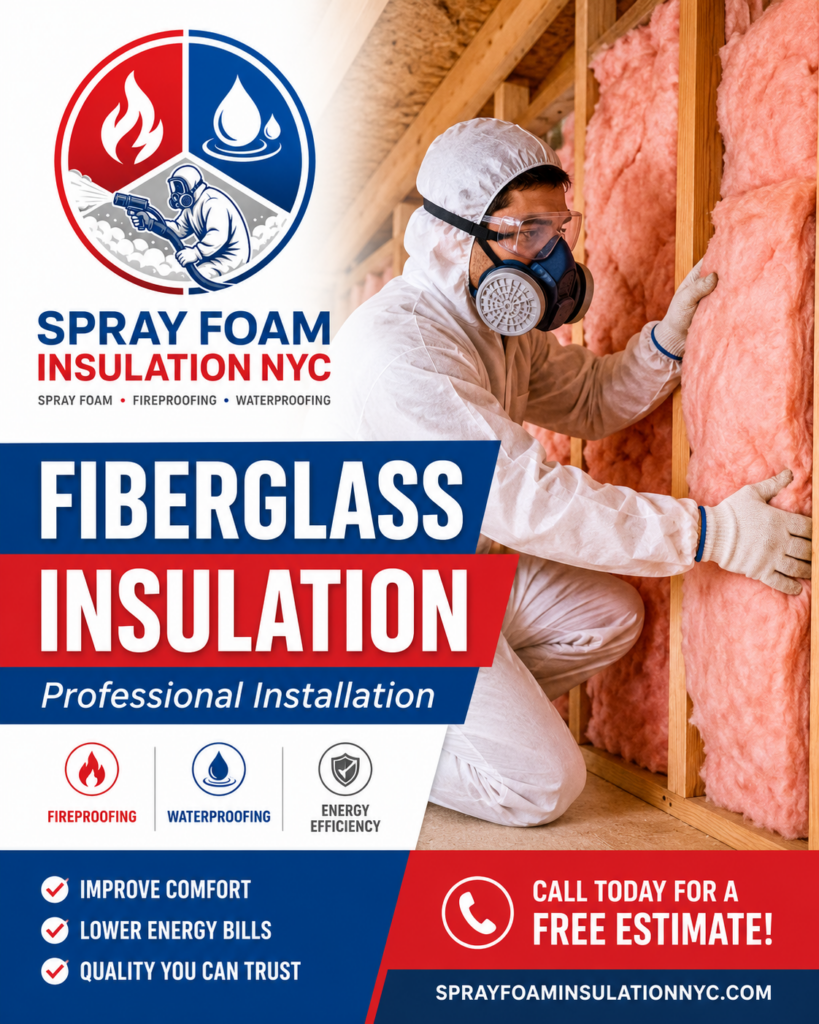
Fiberglass should not simply be described as a material that absorbs moisture like a sponge. The more important concern is that fiberglass does not stop humid indoor air from moving through gaps in the ceiling.
In winter, warm, moisture-laden air from a bathroom or apartment can enter a cold roof cavity. When that air reaches a sufficiently cold roof surface, condensation can form on the roof deck, framing, fasteners, or nearby building materials.
This can contribute to:
Bathroom exhaust fans should always discharge directly outdoors.
Before spray foam or another insulation product is installed in an existing roof cavity, the roof should be inspected for leaks and the wood should be sufficiently dry.
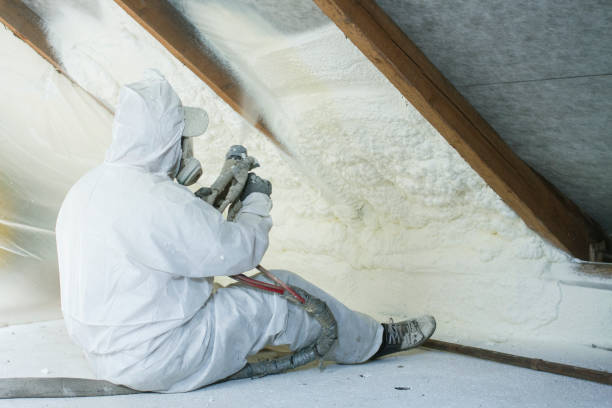
For a shallow ceiling directly below an older roof, especially where there is limited access through a skylight, closed-cell spray foam is often the strongest insulation option.
Closed-cell spray foam can provide several functions in one application:
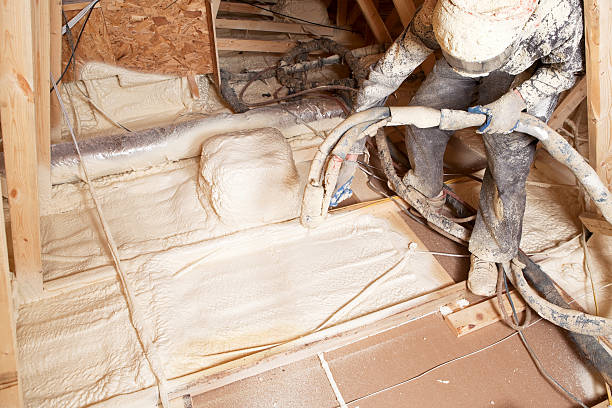
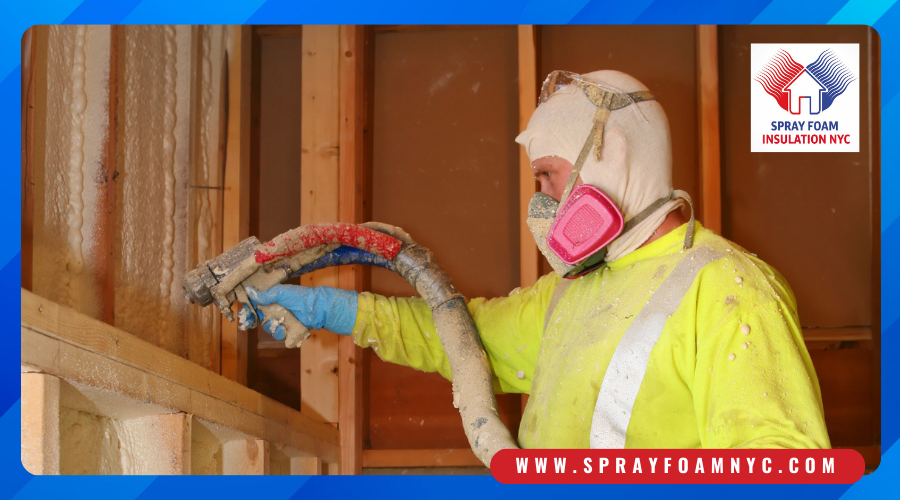
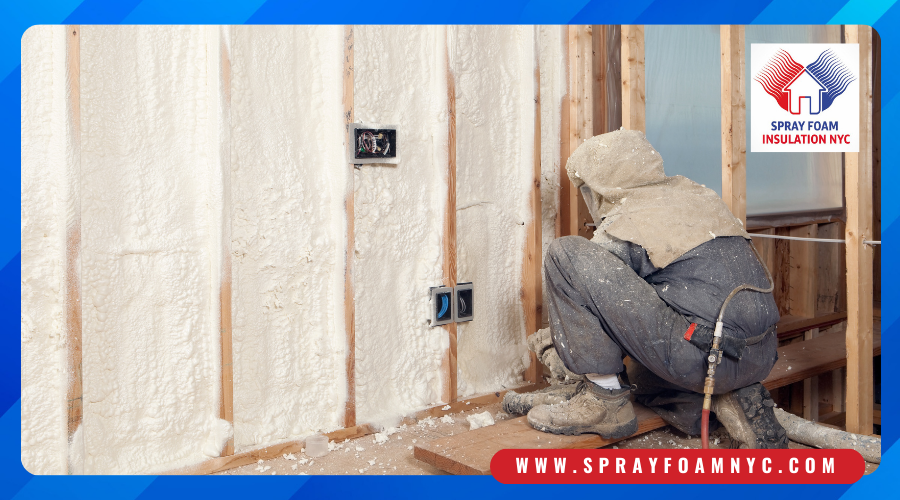
Unlike fiberglass batts, spray foam expands and adheres to the surfaces where it is applied. This allows it to seal cracks, framing joints, and difficult areas around roof penetrations.
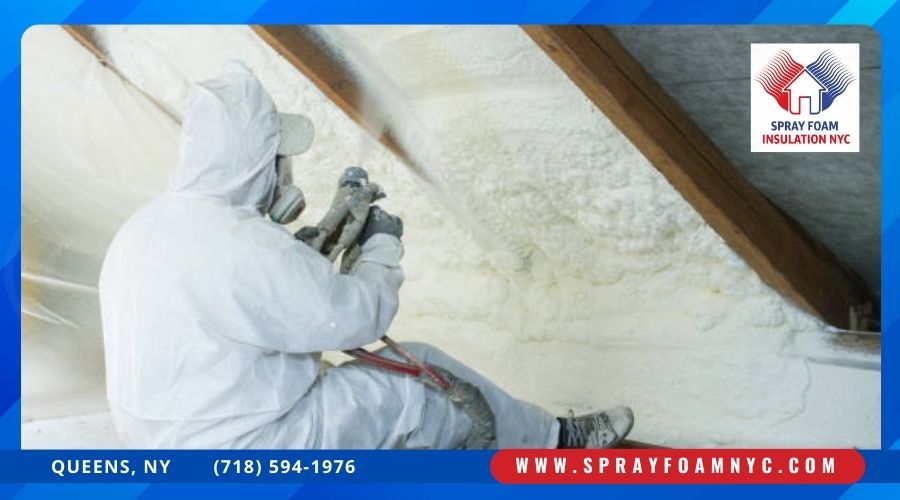
Closed-cell spray foam may be used as part of a properly designed unvented roof assembly. When correctly specified and installed, it can provide thermal insulation, air control, and vapor control within a limited amount of space.
Closed-cell spray foam commonly provides approximately R-6 to R-7 per inch, depending on the specific manufacturer and product.
For example:
3 inches × approximately R-6 to R-7 per inch = approximately R-18 to R-21
The exact installed R-value must always be based on the approved technical data for the selected spray foam product.
Three inches may significantly improve comfort, air sealing, and moisture control in a shallow cavity. However, it should not automatically be represented as full code-prescriptive ceiling insulation.
When the framing depth cannot accommodate the target R-value, the contractor may need to consider:
The correct insulation system depends on whether the roof will remain vented or become an unvented assembly.
In a vented assembly, the thermal boundary is normally located at the apartment ceiling.
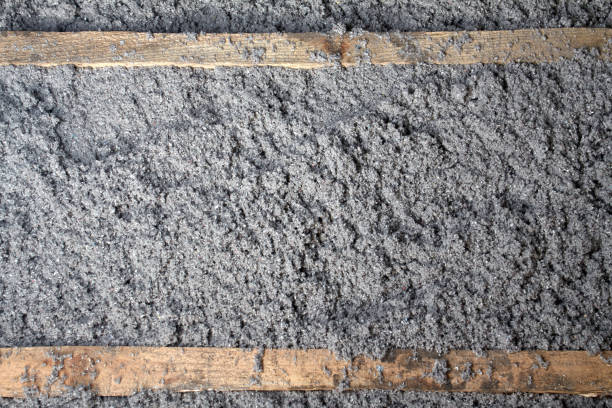
Air sealing is completed at the ceiling plane, and fiberglass, cellulose, or another insulation product fills the available space while a clear ventilation channel remains above it.
Fiberglass can work in this type of system, but R-13 alone is generally not the appropriate target for a top-floor ceiling.
In an unvented assembly, air-impermeable insulation is applied directly to the underside of the roof deck.
Closed-cell spray foam is commonly selected because it provides insulation and controls air movement within a limited framing depth.
An unvented roof must be intentionally designed. Roof ventilation openings should not simply be blocked without evaluating:
An older skylight can be a significant source of heat loss, summer heat gain, air leakage, and water intrusion.
Before insulating around a skylight, a contractor should inspect:
Spray foam should not be used to cover an active roof or skylight leak. The water-intrusion problem must be repaired first.
Customers sometimes compare a fiberglass estimate of approximately $1,200 or $1,500 with a higher spray foam proposal and assume the spray foam contractor is charging only for square footage.
Professional spray foam installation requires mobilizing an entire application system, including:
For this reason, a very small apartment may still be subject to a minimum service charge.
The relevant question is not simply which estimate is cheaper. The question is whether the proposed insulation assembly will properly control heat flow, air leakage, and moisture.
Spending less on an incomplete system can result in paying twice when the ceiling must be reopened and reinsulated.
A responsible contractor should not promise that insulation alone will automatically correct a high heating bill.
The inspection should evaluate:
High energy bills can result from several conditions occurring at the same time.
The roof may be a major contributor, but skylights, windows, exterior walls, heating equipment, and uncontrolled air leakage should also be examined.
For a small top-floor apartment directly below an older roof, do not install R-13 fiberglass without first inspecting and designing the complete roof-ceiling assembly.
Where the cavity is shallow, irregular, difficult to access, or unsuitable for a properly vented fiberglass system, closed-cell spray foam is generally the better solution because it provides both insulation and air sealing.
However, the correct thickness must be calculated accurately. Three inches of closed-cell spray foam normally provides approximately R-18 to R-21.
The final insulation system must also account for:
Spray Foam Insulation NYC provides professional evaluations for apartments, mixed-use buildings, stores, attics, roof cavities, skylight areas, and other difficult-to-insulate spaces throughout New York City and Long Island.
Call: (718) 594-1976
Email: [email protected]
Website: sprayfoamnyc.com
All insulation recommendations and pricing are subject to an onsite inspection, verified measurements, product specifications, building conditions, accessibility, and applicable code requirements.
News & Blog
Trusted Professionals in New York City
Spray foam Insulation, Fireproofing & Drywall Contractors Serving, New York City, Queens, Brooklyn, Staten Island, Manhattan, NJ.
Frequently Asked Questions
Spray foam insulation is a type of insulation that is made by mixing two chemicals that react to form a foam. The foam is then sprayed onto surfaces, where it expands and hardens into a solid material that provides excellent insulation.
Spray foam insulation is environmentally friendly because it can help reduce energy consumption, which in turn reduces greenhouse gas emissions. Additionally, spray foam insulation can be made from recycled materials.
Spray foam insulation can help improve indoor air quality by reducing air infiltration and preventing moisture buildup, which can lead to the growth of mold and mildew.
Spray foam insulation has several benefits over other types of insulation, including improved energy efficiency, better noise reduction, and increased moisture control.
Spray foam insulation is typically fire-resistant, but it is important to check the specific type of insulation being used and ensure that it meets all necessary fire safety standards.
Spray foam insulation is a type of insulation that is made by mixing two chemicals that react to form a foam. The foam is then sprayed onto surfaces, where it expands and hardens into a solid material that provides excellent insulation.
Spray foam insulation can last for many years if properly installed and maintained. It can last up to 80 years, which is much longer than other types of insulation.
Spray foam insulation is environmentally friendly because it can help reduce energy consumption, which in turn reduces greenhouse gas emissions. Additionally, spray foam insulation can be made from recycled materials.
Spray foam insulation can help improve indoor air quality by reducing air infiltration and preventing moisture buildup, which can lead to the growth of mold and mildew.
Spray foam insulation has several benefits over other types of insulation, including improved energy efficiency, better noise reduction, and increased moisture control.
Spray foam insulation is generally more expensive than other types of insulation, but it can provide long-term savings on energy bills and can last for decades.
Yes, spray foam insulation can help reduce noise levels by blocking sound from entering or leaving a space.
The time it takes to install spray foam insulation depends on the size of the area being insulated, but most installations can be completed in one day.
Spray foam insulation can be used in any area of a home or building, including walls, ceilings, attics, and crawl spaces.
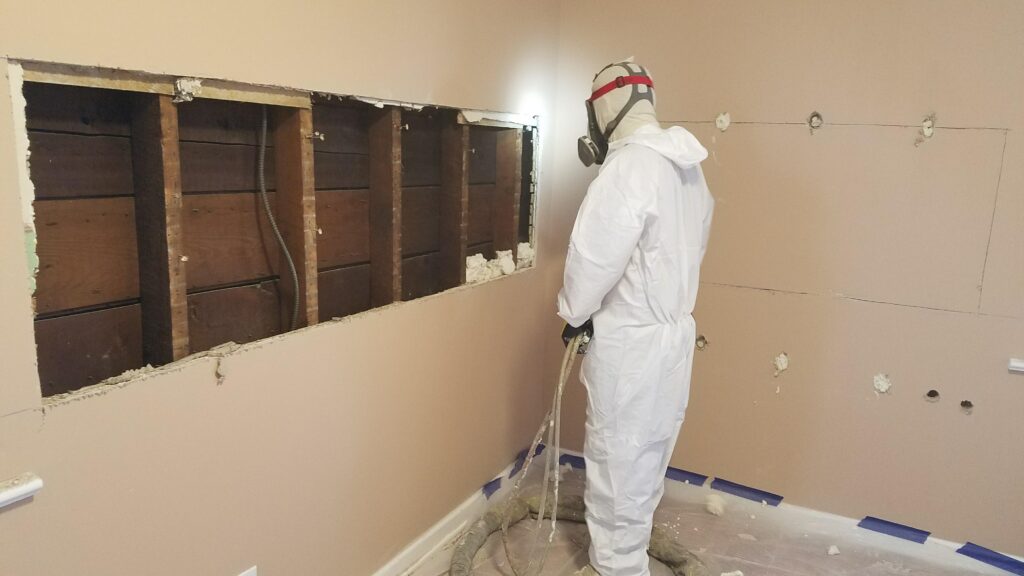
Yes, spray foam insulation can be installed in existing homes or buildings by either spraying it directly onto surfaces or injecting it into existing wall cavities.
Spray foam insulation is typically fire-resistant, but it is important to check the specific type of insulation being used and ensure that it meets all necessary fire safety standards.
During installation, it is important to wear protective clothing, eye protection, and respiratory masks. The installation area should also be well-ventilated to prevent the buildup of fumes.
Spray foam insulation can be removed, but the process can be difficult and expensive. It is usually best to avoid removing it unless absolutely necessary.
Spray foam insulation is typically more energy-efficient than fiberglass insulation because it provides a better seal and prevents air leakage.
No, spray foam insulation does not require any maintenance. It is a long-lasting, low-maintenance insulation option.
Lorem ipsum dolor sit amet, consectetur adipiscing elit. Ut elit tellus, luctus nec ullamcorper mattis, pulvinar dapibus leo.