Yes, using closed-cell spray foam is a highly effective, long-term solution to prevent pipes from freezing and to insulate cold, damp basement walls. It creates an airtight, water-resistant barrier that stops freezing air from contacting pipes while providing high R-value insulation.
Request a Free Spray Foam Quote
SPRAY FOAM INSULATION CONTRACTOR
Yes, using closed-cell spray foam is a highly effective, long-term solution to prevent pipes from freezing and to insulate cold, damp basement walls. It creates an airtight, water-resistant barrier that stops freezing air from contacting pipes while providing high R-value insulation.
How Spray Foam Insulation Works?
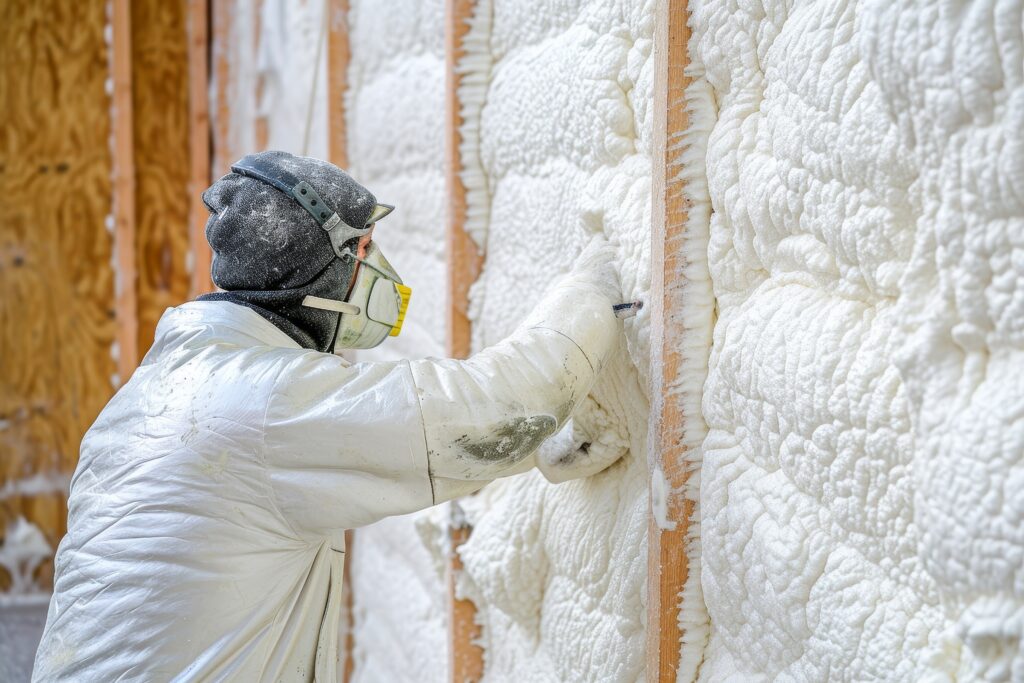
Spray foam is typically applied within the cavities of your home. It forms a continuous barrier on the surface it is applied to. The foam is typically stored as two separate chemicals and is mixed onsite as it’s applied.


Plastic Pipes: If you have PVC or PEX pipes, ensure the foam touches them but does not completely encase them to prevent overheating, especially with hot water lines.
Alternatives: If spraying the entire wall is too expensive, targeting only the rim joists is a common, high-impact alternative.
The R-value is a measure of thermal resistance, indicating how well an insulating material resists the conductive flow of heat. A higher R-value signifies greater insulating power. For example, a material with an R-value of R-6 will resist heat transfer twice as effectively as a material with an R-value of R-3 of the same thickness. It’s crucial for energy efficiency, as a higher R-value means less heat loss in winter and less heat gain in summer, leading to lower energy bills and a more comfortable indoor environment.
Different types of insulation have varying R-values per inch. Closed-cell spray foam typically offers an R-value of R-6 to R-7 per inch, making it one of the most effective insulation materials available. This superior thermal performance contributes significantly to reducing energy consumption and improving overall building performance.
Pipes don’t burst because ice expands outward, but because of the immense pressure that builds between the ice blockage and the closed faucet. When water freezes, it expands by about 9%, according to information from the University of Illinois Extension. This expansion creates a plug of ice inside the pipe. As more water freezes, it pushes the trapped liquid water toward the closed end of the pipe, generating pressure that can exceed 2,000 pounds per square inch (PSI), which is more than enough to rupture steel, iron, or copper pipes.

Effective insulation is the primary defense against this pressure build-up by keeping the pipe wall and the water inside it from reaching 32°F (0°C).
Spray Polyurethane Foam (SPF) is applied as a two-part liquid that mixes at the tip of a spray gun. When it hits a surface, it undergoes a chemical reaction, expanding up to 60 times its liquid volume before hardening into a solid foam. This process is key to its effectiveness.
There are two main types of spray foam, but one is clearly better for protecting pipes.

Not all insulation performs equally when it comes to the unique challenges of protecting pipes. The right choice depends on creating a complete and durable thermal and air barrier. Spray Foam Insulation NYC specializes in delivering professional-grade closed-cell spray foam applications that provide maximum protection against frozen pipes, moisture intrusion, and energy loss.

Trusted Professionals in Brooklyn NY
Spray Foam Insulation NYC, Serving: Nassau County, Suffolk County.